|
|
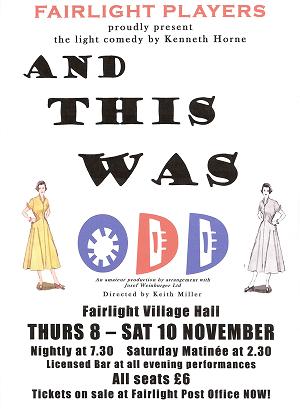
And This Was Odd
by Kenneth Horne
Directed by Keith Miller
|
|
|
|
|
|
Cast |
| Morton (a Manservant) |
David Burchell |
| Nurse Jones |
Libby Annetts |
| Julia Kemp |
Charlotte Eastes |
| Jane Simmons |
Pauline Lucas |
| Frank Kemp |
Bez Cuss |
| Margot Kemp |
Jodie Snow |
| Sam Potts |
Tom Miller |
| Mrs. Simmons |
Jennifer Annetts |
| Lady Monica Wilson |
Penny Kenward |
The action
of the play takes place at Frank's house in the country.
It is
Christmas, circa 1950. |
|
Director's
notes
I stumbled across this play, which was first
performed by the Players in 1955,
in the archive, and started reading it simply out of curiosity. What I
found was a delightful comedy which, far from coming across as dated,
still works well, although the language and social context clearly
place it in a bygone era. Thus it has accidentally acquired a period
charm which the writer never intended.
It is a testament to the
quality of the script that this is the first time that the Players have
ever staged a play for a third time. The archive shows that it was
chosen again in the Spring of 1983,
although an old script in the archive box shows that small changes were
made to bring the play up to date. On the opening night, we were
delighted to find in the audience Belinda (Creed) , who played the part
of Margot in the 1983 production.
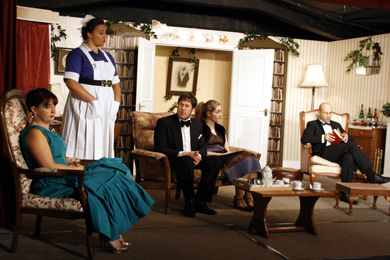
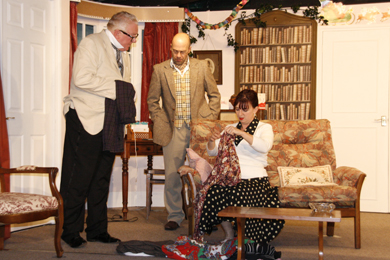
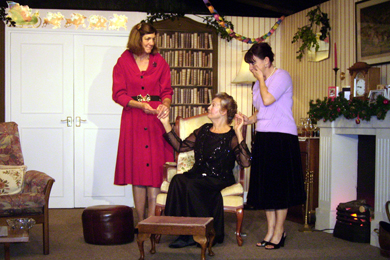
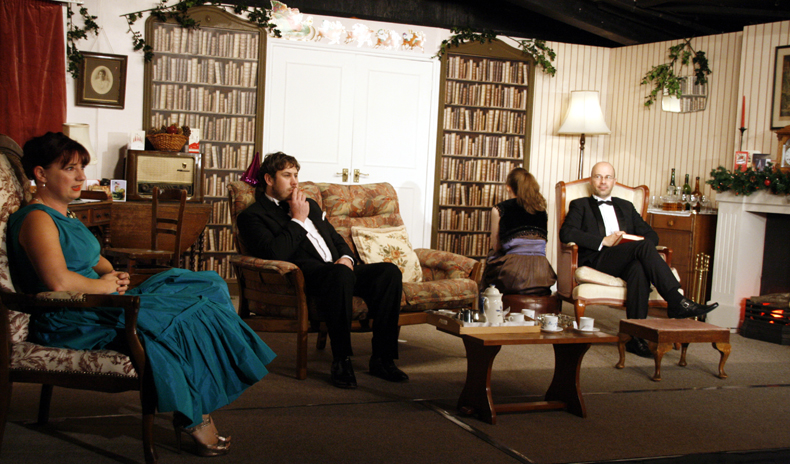
Our splendid set was built under
the supervision of Trevor Lewing, who personally committed many hours
to the project, constructing, among other things, a five bay window
(with functioning openers) and two impressive bookcases. Furnishings,
in the style (so far as we could manage it) of the period were loaned
by friends and family, wjile the authentic looking paper chains were
fashioned by members of the cast out of strips of coloured paper during
breaks in rehearsals. They only fell down once during four performances!
|
|
Review
All the posters were proclaiming ‘And This Was Odd’, but when we
got there, it wasn’t odd at all! Kenneth Horne’s well-known play from
the 1950s was successfully aired by the Players in its early days, and
again in the mid-70s, and director Keith Miller had stumbled across it
by chance, deciding that the piece, with well-drawn characters of six
females and three males in a family plus nurse, butler and friends,
also offered a nostalgic period-piece dimension. The
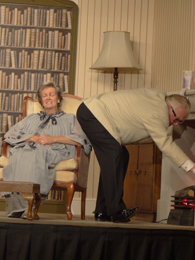
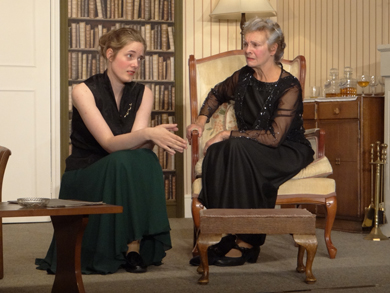
benevolent matriarch Mrs Simmonds gave Jennifer Annetts a major role,
and she wasted not one moment, whether as ‘herself’ or when rendered
invisible by her sleeping pills. Her playing was richly varied and very
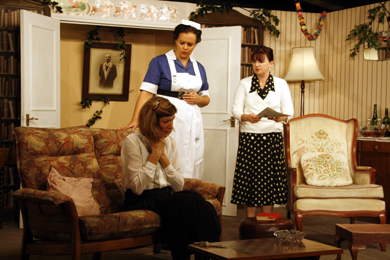
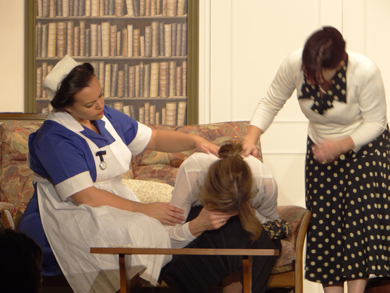
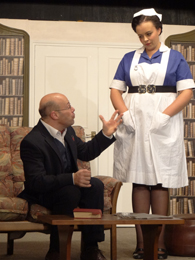
funny. She was in the care of Nurse Jones, played by Libby Annetts in
very good form, ruling her patient medically – and everybody else
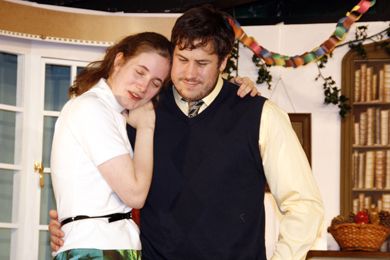
socially, with her ‘nursey knows best’ approach. Son-in-law and
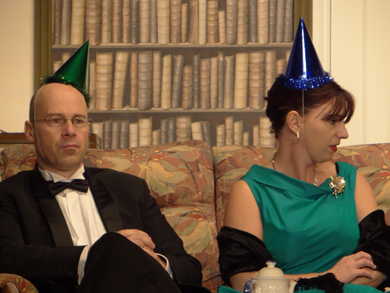
homeowner Frank Kemp had newcomer Bez Cuss in an excellent piece of
acting, especially in his crush on the professionally correct nurse.
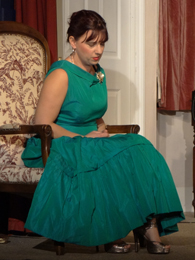
Charlotte Eastes played his wife, Julia, under pressure over a gambling
debt, and this always dependable actress was fine in the part. Her
daughter, Margot, saw another Player’s debut, this time from Jodie
Snow, who mastered the quirky and vacillating intensity of the
teenager, just as troubled 60 years ago as they are today. Her
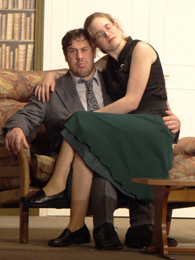
boyfriend, Sam Potts, was well dealt with by Tom Miller, another wholly
reliable actor. Quiet for long periods, the apparent worm finally
turned and came to believable life. Pauline Lucas made a good job of
the hysterical spinster sister. Two players seen but rarely here did
well. David Burchell’s ‘man’ Morton was hilariously observed and acted,
an inveterate tip-toeing drink pincher, while Penny Kenward’s frightful
guffawing and totally unpleasant Lady Monica was well done. The
setting turned the minuscule stage into the bay-windowed lounge of a
well-to-do upper middle class family home, and Trevor Lewing is to be
congratulated on his first major set for the Players. Ken Hall, also a
first timer, lit the play, with sound coming from Keith Jellicoe (or
rather, his equipment) A nicely judged costume plot enhanced that 50’s
feel, thanks to Monica Hayes plus June Dyer. Margaret Hall’s props were
faultless as usual, and stage management was in the hands of Vincent
Bruce. A pleasant, easy to watch evening, directed to ensure all
aspects of the piece were given their due by a strong cast.
|
|
|