Review
From
the outset it was clear that this production was creating a lot of
interest in the area. As it turned out, we smashed the group's all-time
box office record, with every seat sold over the run of four
performances. Had we known just how popular it would be, we would
certainly have planned for an extra performance, but adding one in at a
late stage proved to be impossible to engineer.
From the 456
people who managed to catch the production, there was nothing but
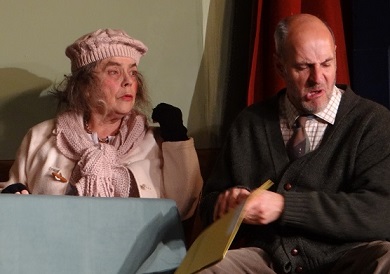
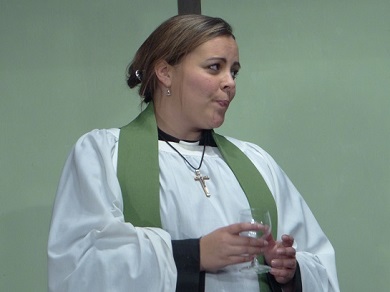
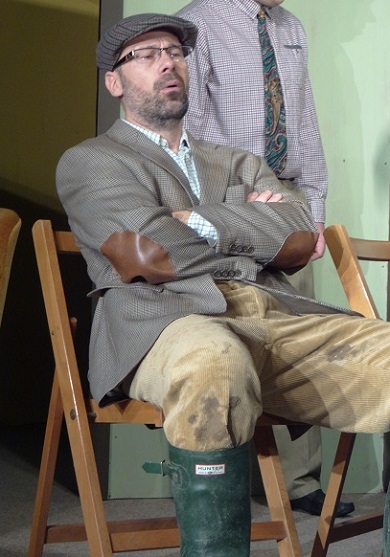
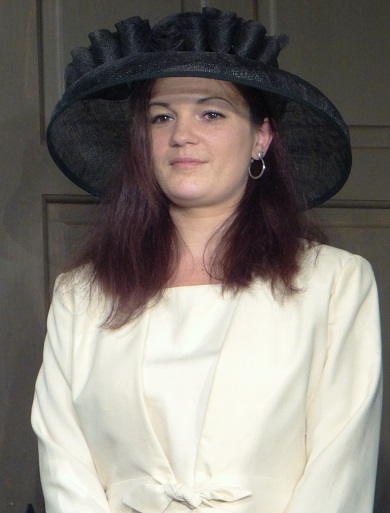
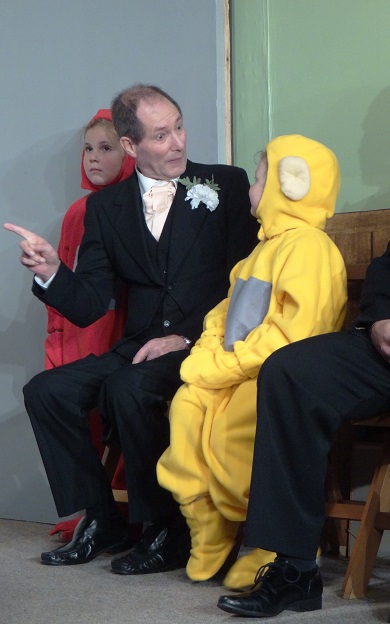
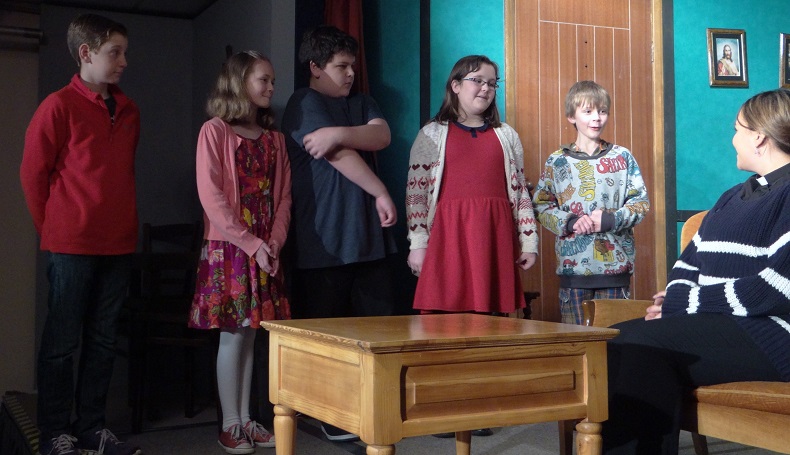
praise. Every member of the cast excelled in their respective roles,
including the seven children who relished this new experience. The set
was stunning, the light and sound spot on. Even the director managed a
brief cameo appearance as the manic conductor during the wedding scene.
Fitting
all of the action, mainly taking place on a split set between the
Parish Room and the Vicarage, onto our small Fairlight Stage was a
major challenge, made possible by some clever set design and some
tricky lighting - our lighting setup does not lend itself readily to
such a task, and John Veness had to use all of his ingenuity to achieve
the desired result.
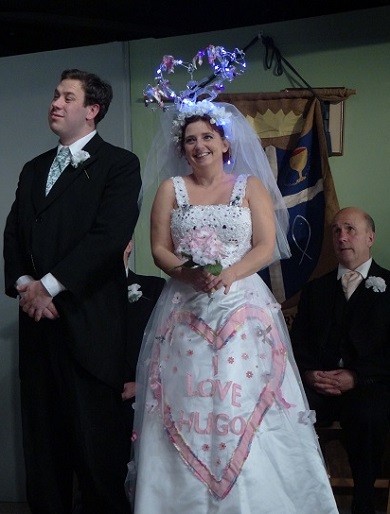
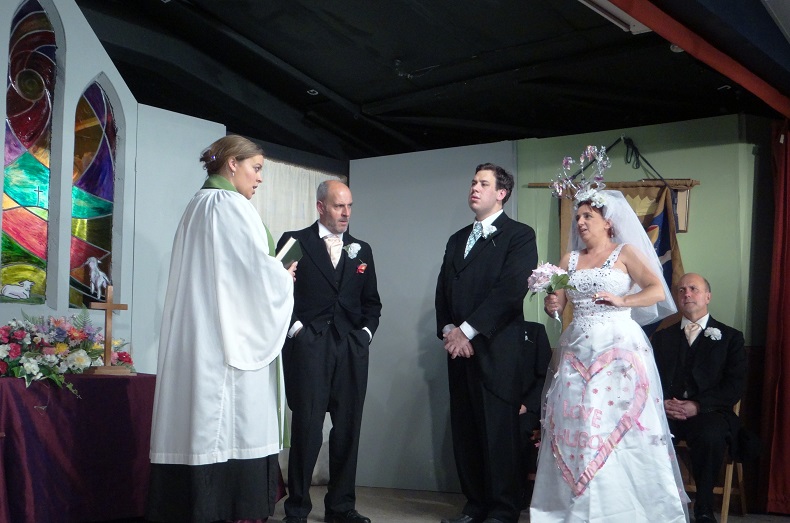
The greatest challenge though was the
transformation of the whole stage into the interior of Dibley Church
for the wedding of Alice and Hugo. In just over one minute, the Parish
Room and the Vicarage were gone, and there was an audible collective
gasp as the curtains opened onto the church scene, dominated by the
magnificent stained-glass window which was made especially for us by
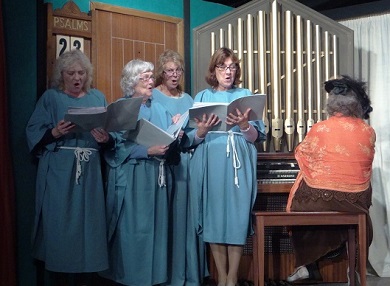
Ruth Ward. A few feet away, Mrs. Cropley sat at the organ "playing" a
short burst of Widor's Tocatta whilst waiting for the arrival of the
bride. We were indeed fortunate to benefit from the exceptional skill
of Stephen Page who recorded the organ music for us. Where else would
you find an organ recording of The Spice Girls' "Two Become One", nor,
for that matter, the classic Troggs' track, "Wild Thing".
For
this production we threw away the normal seating plan, and instead
adpoted a central aisle so that the entire village hall became, to all
intents and purposes, the Parish Church of St Barnabus, Dibley.
Incidentally, we checked the spelling and found that the Dibley St
Barnabus is, unlike the biblical Barnabas, spelt with a "u".
An
incidental pleasure was the opportunity to support through this
production the excellent work of Comic Relief. The close involvement of
Richard Curtis with that charity is well known, and it was the wish,
both of the writers of the stage adaptation and of the owners of the
rights to the original TV series, that all royalty payments should go
directly to Comic Relief. In addition, we made a bucket collection at
each performance, the overall result (with royalties and donations
combined) being total payments to Comic Relief in the region of 850 pounds.